Peas are one of the easiest vegetables to grow — but only if you plant them at the right time. Get the timing wrong, and even healthy seedlings will struggle, produce poorly, or simply stop growing once temperatures climb. That is why understanding when to plant peas is the first and most important decision any gardener makes before putting a single seed in the ground. Peas are cool-season crops, which means they thrive in mild temperatures and fade quickly in summer heat. Plant them too late, and the warm weather cuts your harvest short. Plant them at the right moment, and you get a full, productive crop with minimal effort. This guide covers everything you need to know — from frost dates and soil temperatures to region-specific timing for gardeners and beyond.
Why Timing Matters When Planting Peas
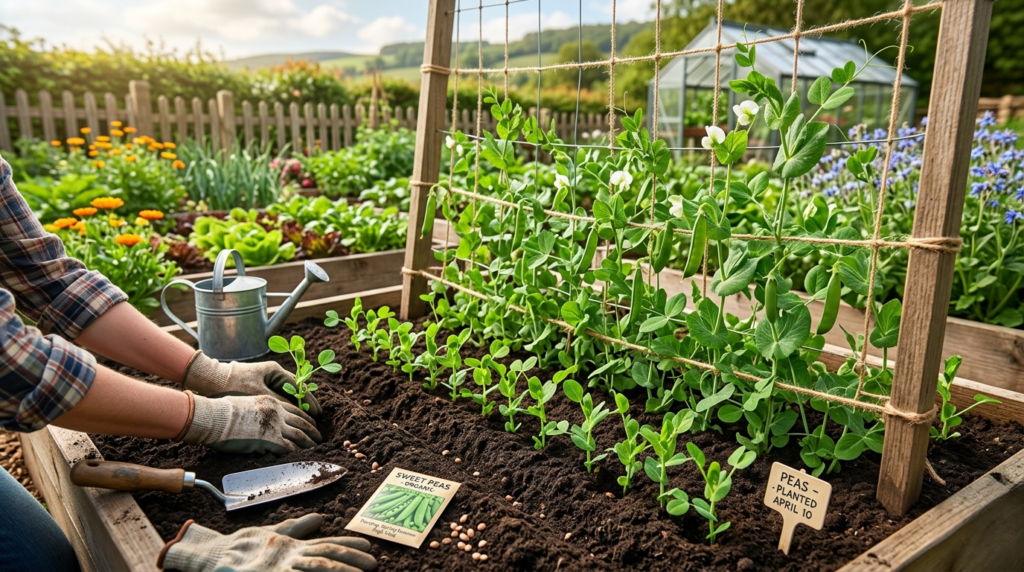
Peas are not forgiving when it comes to temperature. Plant them at the wrong time and the results are disappointing — small pods, poor germination, or plants that simply stop producing altogether.
- Peas are cool-season crops — they grow best when temperatures stay between 10°C and 18°C
- Heat reduces yield and quality — once temperatures cross 25°C, plants stop flowering and pods become tough and starchy
- Early planting = better harvest — getting seeds in the ground early gives plants enough cool weeks to fully mature and produce
Peas grow best in cool weather and slow down significantly the moment heat sets in.
When to Plant Peas (General Rule)
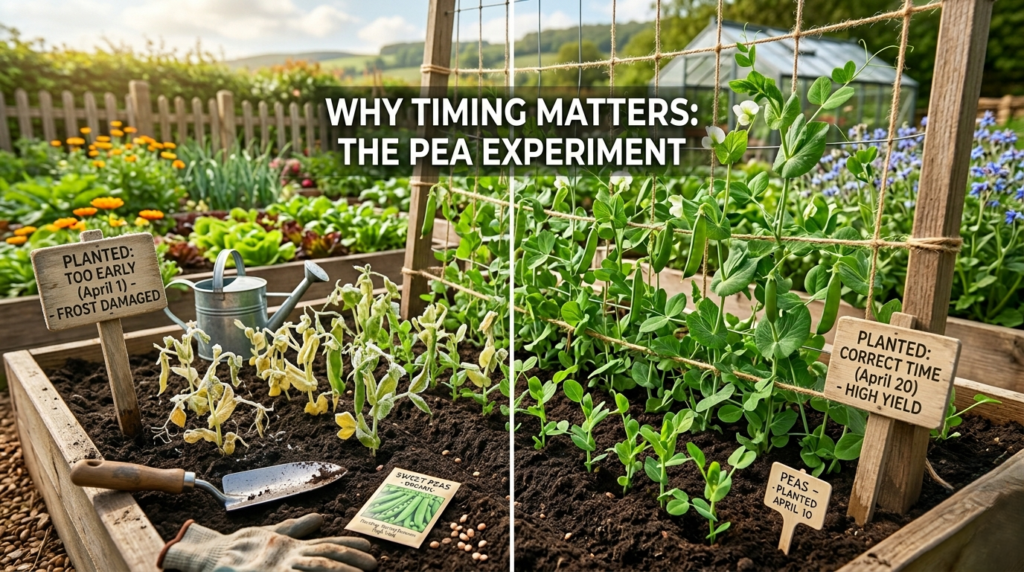
If you are unsure exactly when to start, this general rule covers most regions and climates. Peas are hardy enough to go in the ground earlier than most vegetables, which works in your favor.
- Plant 4–6 weeks before your last frost date — this gives plants enough cool growing time before summer heat arrives
- Soil temperature should be around 4°C–15°C (40°F–60°F) — peas can germinate in cold soil, but slightly warmer conditions speed up sprouting
- Peas can tolerate light frost — a mild frost will not kill established seedlings, making early sowing completely safe
Sowing early ensures your plants mature and produce a full harvest well before summer heat shuts them down.
Best Time to Plant Peas by Season
Peas can be grown in two main seasons depending on where you live. Choosing the right season for your region makes a significant difference in how well your crop performs.
🌸 Spring Planting
Spring is the most common and reliable time to plant peas across most parts of the world.
- Late winter to early spring is the ideal window to get seeds in the ground
- Sow as soon as the soil is workable — meaning it is no longer frozen or waterlogged
- Ideal for most regions where summers get warm and winters are moderately cold
🍂 Fall Planting
Fall planting is a great option for gardeners in warmer climates where spring arrives too quickly.
- Sow 6–8 weeks before your first expected frost to give plants enough time to mature
- Works best in warm climates where winters remain mild and do not drop to freezing temperatures
Fall planting often produces sweeter, more tender peas because the cooling temperatures toward harvest time bring out natural sugars in the pods.
When to Plant Peas in the US
Planting times for peas across the United States vary quite a bit depending on which region you are in. In the Northeast and Midwest, where winters are harsh, the best time to plant is between late March and mid-April, as soon as the ground thaws and becomes workable. In the Pacific Northwest, mild winters allow gardeners to sow as early as February or March. The Southern states have a different window altogether — plant between January and February to take advantage of cool winter temperatures before the heat sets in. In mountain and high-altitude regions, wait until April or May when soil temperatures become consistently suitable for germination. Regardless of your location, always check your local last frost date before sowing to get the timing right for your specific area.
When to Plant Peas by Climate Zones
Your climate zone is one of the most reliable guides for deciding exactly when to sow peas. What works in one region can completely fail in another, so knowing your zone removes a lot of guesswork.
- Cold regions (harsh winters, short summers) — plant in April–May once the soil thaws and frost risk reduces
- Moderate regions (mild winters, warm summers) — plant in February–March for a strong spring harvest
- Warm regions (minimal frost, hot summers) — plant in January–February or switch to fall planting instead
Timing your sowing around your local frost dates and seasonal temperatures is always the most dependable approach.
Soil Temperature & Conditions for Planting
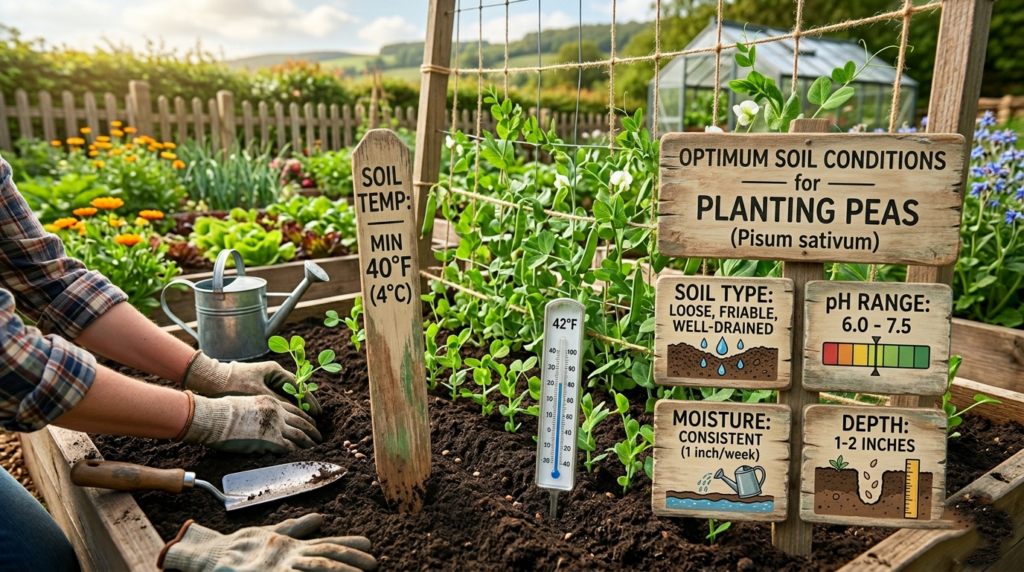
Soil temperature is something many gardeners overlook, but it directly affects how quickly and successfully your peas germinate. Peas can sprout in surprisingly cold soil, but the conditions still need to be within a workable range.
- Minimum soil temperature: 4°C (40°F) — below this, germination slows down significantly or stalls completely
- Ideal soil temperature range: 10°C–18°C — seeds sprout faster and seedlings establish more strongly
- Well-drained soil is essential — peas sitting in waterlogged ground will rot before they ever sprout
Beyond temperature, soil quality matters just as much. Peas prefer fertile, loose soil with good drainage and a slightly neutral pH. Work in some compost before sowing to improve both soil structure and nutrient availability. Avoid heavy clay soils that hold too much moisture. Peas germinate even in cold soil but grow noticeably faster and stronger in slightly warmer, well-prepared conditions.
Common Mistakes to Avoid
Even with the best intentions, small timing and care mistakes can cost you an entire pea harvest. Here are the most common ones to watch out for before and after sowing.
- Planting too late — this is the single biggest mistake pea growers make. When seeds go in too close to summer, plants barely establish before heat shuts down flowering completely. You end up with weak plants and almost no pods worth harvesting
- Planting in hot soil — peas planted in soil that is already warm struggle to germinate properly. Hot soil encourages seed rot rather than sprouting, wasting both your time and seeds
- Overwatering — peas need consistent moisture but not soggy conditions. Waterlogged soil suffocates roots and causes seeds to rot in the ground before they even get a chance to sprout
- Ignoring frost dates — planting too early without checking your local frost dates can expose young seedlings to a hard freeze. While peas tolerate light frost, a severe cold snap after germination can wipe out your entire crop overnight
Conclusion
Growing peas successfully comes down to one thing — getting your timing right. These are cool-season crops that reward early action and punish late planting. The window between workable soil and summer heat is shorter than most people expect, so planning ahead genuinely matters. Check your local frost dates, test your soil temperature, and get your seeds in the ground as early as conditions allow. In colder countries, target late winter to early spring. Every region has its ideal window — your job is to find yours and stick to it. A well-timed planting is the simplest and most effective step toward a full, healthy pea harvest.
Frequently Asked Question
Q1: Can peas be planted in summer?
No, peas are cool-season crops and do not perform well in summer heat. Once temperatures rise above 25°C, plants stop flowering, pods become tough, and overall yield drops sharply. If you missed the spring window, wait for fall planting instead of forcing a summer sow.
Q2: What month is best for peas?
It depends entirely on your region. In most temperate countries, late February to April is the ideal window for spring planting.
Q3: How long do peas take to grow?
Most pea varieties take between 60 and 70 days from sowing to harvest. Some early-maturing varieties can be ready in as little as 55 days, while larger or late-season varieties may take up to 80 days. Always check the seed packet for the specific maturity timeline of the variety you are growing.