Romaine lettuce is one of my favorite crops to grow every single season. I have tried butterhead, bibb, and loose-leaf varieties, but nothing compares to the thick, crisp leaves of a fresh romaine head. Growing romaine lettuce in my backyard has been one of the most rewarding gardening decisions I have made. The leaves stay firm, clean, and flavorful far longer than other types. Romaine also handles the unpredictable spring weather across the U.S. better than most greens. It grows upright, saves space, and resists pests naturally. Whether you have a raised bed, an in-ground garden, or a patio pot, romaine fits perfectly. This guide covers everything you need — from seed selection to final harvest.
What Is Romaine Lettuce?
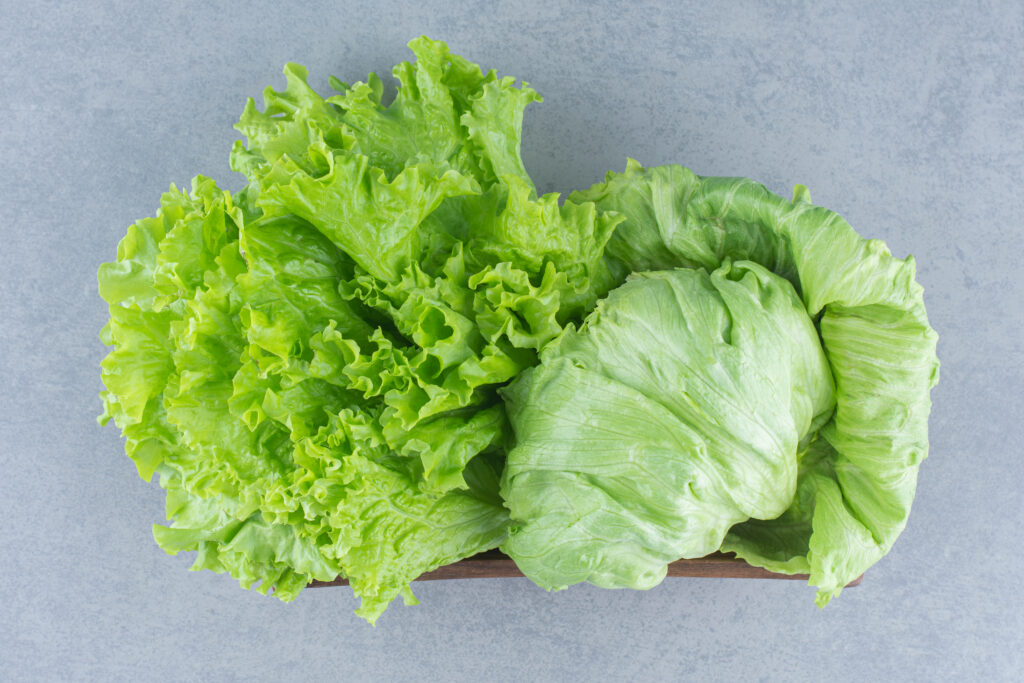
Romaine lettuce is a tall, upright leafy green with firm, thick leaves and a crunchy texture that softer varieties simply cannot match. Unlike iceberg lettuce, which forms a dense, watery round head, or butterhead, which grows soft and loosely packed leaves, romaine stands tall with sturdy midribs and tightly layered leaves. That firm structure makes it the top choice for Caesar salads, wraps, and grain bowls across the U.S. It also packs real nutritional value — romaine is rich in vitamin A, vitamin K, folate, and fiber. You get great taste and solid nutrition in every single leaf.
Best Time for Growing Romaine Lettuce
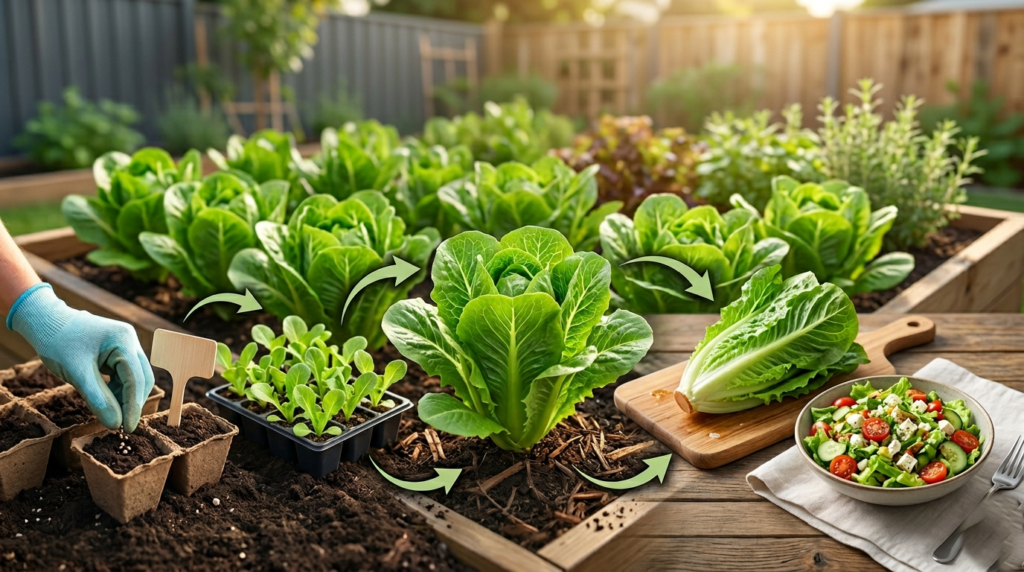
Romaine grows best in cool weather, making spring and fall the ideal seasons across most of the U.S. For spring planting, soil temperatures between 45°F and 65°F are perfect. Start seeds indoors 10 to 12 weeks before your last frost or sow directly outdoors 6 to 8 weeks before it. Fall-grown romaine often tastes noticeably sweeter because cooler nights slow growth and concentrate natural sugars. Sow your fall crop in mid to late August for a October harvest. Summer growing is possible but tricky — high heat causes bolting. Use shade cloth to keep plants cool and slow that process down.
Choosing the Best Romaine Lettuce Varieties
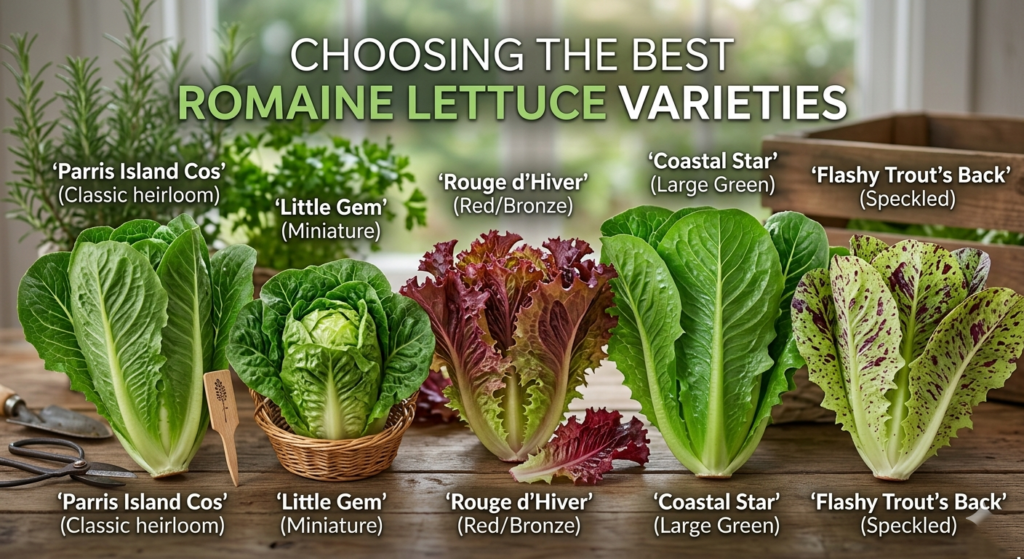
Walking into a seed store, the variety options can feel overwhelming. Here are the best picks for U.S. gardeners:
Green Varieties:
- Paris Island – A classic, reliable producer with crisp, full heads
- Little Gem – Compact and perfect for small gardens or containers
- Valmaine – Extremely heat tolerant, great for warmer U.S. regions
Red and Speckled Varieties:
- Rouge d’Hiver – Beautiful deep red leaves with excellent cold tolerance
- Flashy Trout’s Back – Stunning green leaves with red speckles
- Outredgeous – Bold red color and surprisingly sweet flavor
For beginners, Little Gem and Valmaine are the easiest starting points — both are low-maintenance and forgiving in variable weather conditions.
How to Grow Romaine Lettuce From Seed & Best Soil and Sunlight Requirements
Starting seeds indoors gives you a head start. Sow seeds 10 to 12 weeks before your last spring frost, keeping grow lights on 14 to 16 hours daily. Water consistently and harden off seedlings over 10 to 14 days before moving them outside.
For direct sowing, plant seeds one-quarter to one-half inch deep, spacing plants 6 inches apart. Germination typically takes 7 to 10 days in cool U.S. soil conditions.
Prefer skipping seeds? Nursery transplants save time and establish quickly with minimal effort.
Soil Requirements:
- Use loose, well-draining soil with added finished compost
- Organic matter improves moisture retention significantly
- Ideal soil pH sits between 6.0 and 7.0
Sunlight Needs:
- Romaine prefers full sun — at least 6 hours daily
- Partial shade works during hotter months to prevent bolting
Watering Romaine Lettuce Properly & Fertilizing for Faster Growth
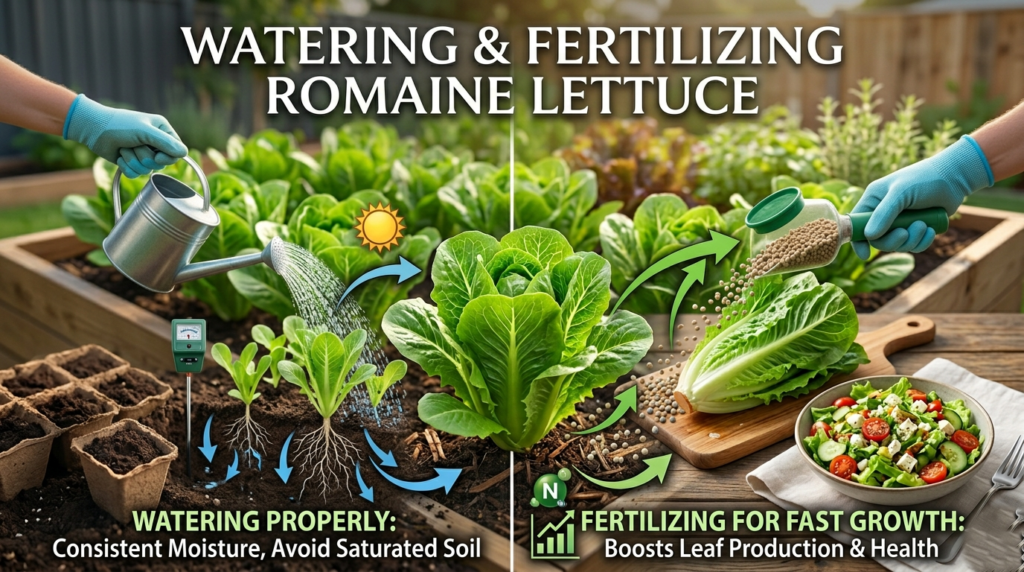
Consistent watering keeps romaine crisp and productive. In most U.S. regions, water plants two to three times per week. During hot spells, daily watering may be necessary.
Watering Tips:
- Yellowing, wilting leaves signal underwatering
- Mushy stems and root rot indicate overwatering
- Always water at the base — wet leaves invite fungal disease
- Drip irrigation works best for keeping leaves dry and crisp
Fertilizing Tips:
- Feed plants every two to three weeks with organic liquid fertilizer
- Fish hydrolysate and compost tea are excellent natural options
- Avoid excessive nitrogen — it pushes leafy growth but weakens flavor
- Side-dress with finished compost midseason for a gentle, steady nutrient boost
Balanced feeding combined with proper watering produces thick, tender heads worth harvesting.
Common Problems When Growing Romaine Lettuce
Every gardener faces pest and disease issues at some point. Knowing what to look for makes a big difference.
Common Pests:
- Slugs and Snails – Chew irregular holes in leaves overnight. Use organic iron phosphate bait around plants
- Aphids – Cluster under leaves and weaken plants fast. Plant sweet alyssum nearby to attract natural predators
- Caterpillars – Hand-pick them off or apply organic Bt (Bacillus thuringiensis) spray
Common Diseases:
- Powdery Mildew – White coating on leaves caused by poor air circulation
- Lettuce Rot – Develops in soggy, poorly drained soil. Always water at the base
- Avoid fresh manure near plants to prevent bacterial contamination
Natural Protection Methods:
- Use floating row covers to block insects early in the season
- Interplant with sweet alyssum, marigolds, or dill for natural pest deterrence
- Apply neem oil spray as a safe, organic solution against multiple pests
How Long Does Romaine Lettuce Take to Grow & Tips for Growing Bigger and Healthier Romaine Lettuce
Romaine moves through growth stages steadily when conditions are right. Seeds germinate within 7 to 10 days in cool U.S. soil. Baby greens are ready to harvest in as little as 30 days. Full heads take 70 to 80 days from seed to reach complete maturity.
Growth Stages:
- Days 1 to 10 — Germination and sprouting
- Days 10 to 30 — Early leaf development, baby greens ready
- Days 30 to 80 — Head formation and full maturity
Tips for Bigger, Healthier Heads:
- Space plants 6 inches apart — crowding stunts head development significantly
- Apply a 2-inch layer of mulch around plants to retain soil moisture
- Use shade cloth during summer heat to slow bolting and preserve leaf quality
- Practice succession planting every two to three weeks for a continuous, steady harvest throughout the entire growing season
These simple steps make a noticeable difference in both yield and overall leaf quality.
Harvesting Romaine Lettuce the Right Way
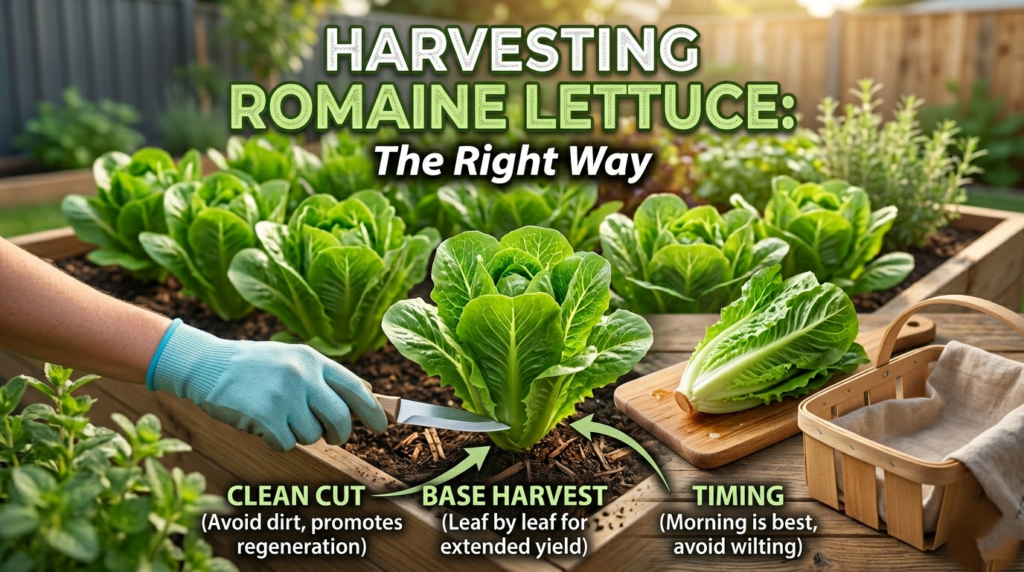
Knowing exactly when and how to harvest makes all the difference in flavor and freshness.
Baby Leaf Harvesting:
- Start cutting outer leaves at 30 days
- Use the cut-and-come-again method — trim leaves one inch above the base and the plant keeps producing new growth
Full Head Harvesting:
- Heads are ready when firm, tall, and tightly packed — typically 70 to 80 days from seed
- Use a sharp knife and cut cleanly at the base just above soil level
- Harvest early morning when leaves hold maximum moisture and crispness
Storage Tips:
- Wrap unwashed heads loosely in a damp paper towel
- Store in the refrigerator crisper drawer at 32°F to 40°F
- Properly stored romaine stays fresh and crisp for up to 10 days
Conclusion
Romaine lettuce has proven itself to be one of the most beginner-friendly crops you can plant in any U.S. garden. Focus on cool-season planting, consistent watering, proper spacing, and organic pest control — those four things alone will get you a solid harvest every single time. Do not stop at just one variety this season. Try a red-leaved type alongside a heat-tolerant green variety and see what works best in your specific climate. There is nothing quite like stepping outside, cutting a fresh head of romaine, and building a crisp salad right from your own backyard. Once you start growing your own, store-bought lettuce never feels the same again.
Frequently Asked Questions
Can I grow romaine lettuce indoors?
Yes. Place pots near a sunny window or under grow lights running 14 to 16 hours daily. Keep temperatures between 60°F and 70°F for best results.
Can I grow romaine lettuce in pots?
Absolutely. Use a pot holding at least 2 gallons of soil per plant. Make sure it has drainage holes and use high-quality potting mix.
Can I grow romaine lettuce from a stalk?
Yes. Place a leftover romaine stalk in a shallow bowl of water. New leaves sprout within a few days. It will not regrow a full head but produces fresh leaves easily.
Can I grow romaine lettuce from seed?
Yes. Sow seeds one-quarter inch deep, keep soil moist, and expect germination within 7 to 10 days. It is straightforward and beginner-friendly.
Can I grow romaine lettuce hydroponically?
Yes. Romaine actually thrives in hydroponic systems. It grows faster than soil-grown plants and produces clean, crisp leaves with minimal pest issues.
What are the romaine lettuce growing stages? Germination happens within 7 to 10 days. Baby greens are ready around day 30. Full heads mature between 70 to 80 days from seed.
Can I grow romaine lettuce in water? Yes. Place a cut stalk in a shallow dish with one inch of water. Change water every two days. New leaves appear within a week.
Can I grow romaine lettuce in containers?
Yes. Containers work great. Choose a pot at least 6 inches deep, use quality potting soil, water consistently, and feed every two weeks with liquid fertilizer.