Growing your own food is one of the most rewarding things you can do — but a lot of first-time gardeners make the same mistake: they plant everything too close together and wonder why their crops underperform. The truth is, how you arrange and space your plants matters just as much as what you grow. Good vegetable garden layout plans and spacing directly affect how much sunlight each plant receives, how well air moves through the bed, and ultimately how much food you harvest. A little planning before you put a single seed in the ground can save you weeks of frustration later. This guide walks you through every layout type, spacing rule, and practical tip you need to grow a productive, well-organized vegetable garden — from scratch.
Why Vegetable Garden Layout and Spacing Matter
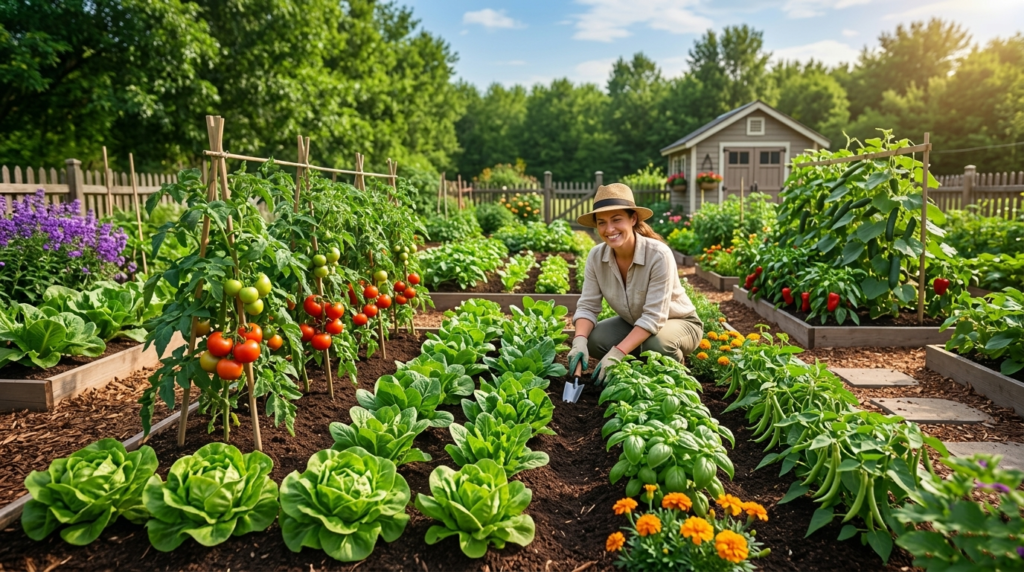
Most people focus on what to plant but pay little attention to where and how far apart to plant. That’s a mistake. Proper spacing gives each plant enough room to spread its roots, pull nutrients from the soil, and grow to its full size. When plants are too close together, they compete for the same water, light, and minerals — and none of them win. A well-planned layout also controls how sunlight reaches your crops. Taller plants placed incorrectly can shade out shorter ones, cutting off the light they need for healthy growth. Layout also determines how air moves through your garden. Good airflow between plants reduces moisture buildup on leaves, which is one of the main reasons fungal diseases like blight and mildew spread so quickly in crowded beds. Overcrowded gardens don’t just produce less — they become harder to manage. You can’t walk between rows, identify problems early, or harvest without damaging nearby plants. A little spacing discipline from the start keeps your garden healthy, productive, and easy to work in all season long.
Types of Vegetable Garden Layout Plans
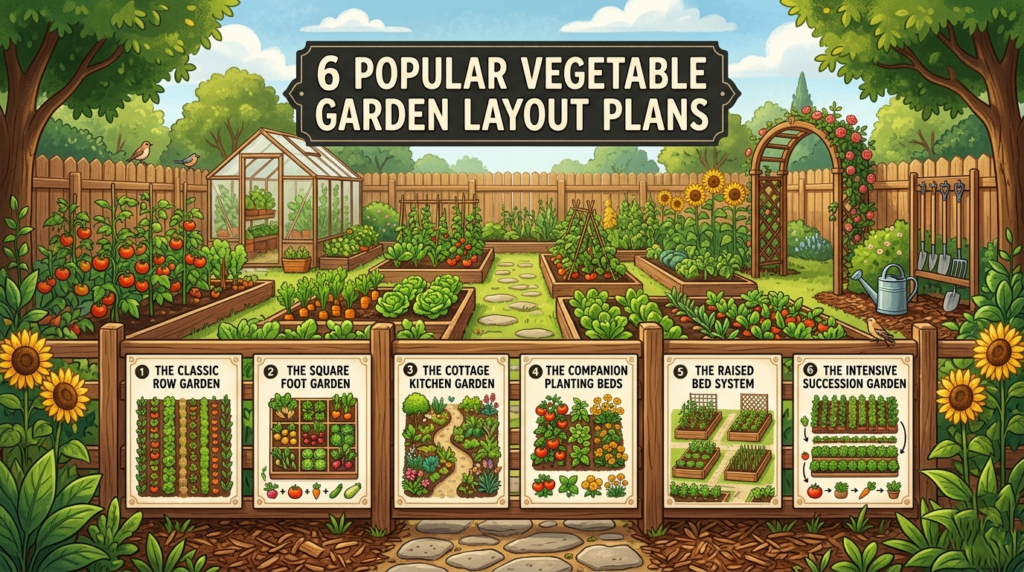
There is no single “correct” way to arrange a vegetable garden. The best layout depends on how much space you have, what you want to grow, and how much time you can put into maintenance. Here are the four most practical and widely used layout types to help you choose the right fit for your situation.
1. Row Planting Layout
Row planting is the most traditional approach — crops are planted in straight, parallel lines with clear paths between them. Farmers have used this method for centuries, and it still works well today for anyone with a large plot of land.
- Best for large gardens where you need to manage high volumes of crops efficiently
- Easy to maintain — rows make watering, weeding, and harvesting straightforward
- Requires more space than other methods since walking paths take up a significant portion of the area
If you have open ground and plan to grow in bulk, row planting gives you a clean, organized system that is easy to follow.
2. Raised Bed Layout
Raised beds are built-up growing areas, usually framed with wood or stone, filled with quality soil. They sit above ground level, which gives you complete control over what your plants grow in. This is one of the most popular options for home gardeners today.
- Ideal for small spaces — you can fit raised beds into tight backyards, patios, or uneven ground
- Better soil control — you fill the bed with the exact mix your plants need, free from compaction and poor drainage
- High productivity — because the soil is loose and nutrient-rich, plants grow faster and yield more per square foot
Raised beds also warm up quicker in spring, which means you can start planting earlier in the season.
3. Square Foot Gardening Layout
Square foot gardening divides your growing area into a grid of one-foot squares, with each square dedicated to a specific plant or group of plants. It was developed as a way to make the most out of limited space without wasting a single inch.
- Grid-based planting keeps everything organized and easy to track
- Maximizes space by eliminating unnecessary row gaps and grouping plants by their spacing needs
- Beginner-friendly — the structure removes guesswork about how many plants fit where
If you are new to gardening and want a simple, clear system to follow, square foot gardening is one of the easiest methods to start with.
4. Vertical Gardening Layout
Vertical gardening takes your growing space upward rather than outward. Instead of spreading plants across the ground, you train them to grow up trellises, fences, poles, or wall-mounted structures.
- Perfect for limited space — balconies, narrow side yards, and small patios can all support a vertical garden
- Uses trellis for climbers like cucumbers, beans, peas, and tomatoes, keeping them off the ground and well-aired
Beyond saving space, vertical growing also makes harvesting easier since the fruits hang at eye level and are simple to spot and pick.
Each of these layouts has real strengths depending on your garden size, budget, and goals. Many gardeners combine two or more of them — for example, using raised beds with a vertical trellis at the back — to get the best results from the space they have.
Key Factors to Consider Before Planning Layout
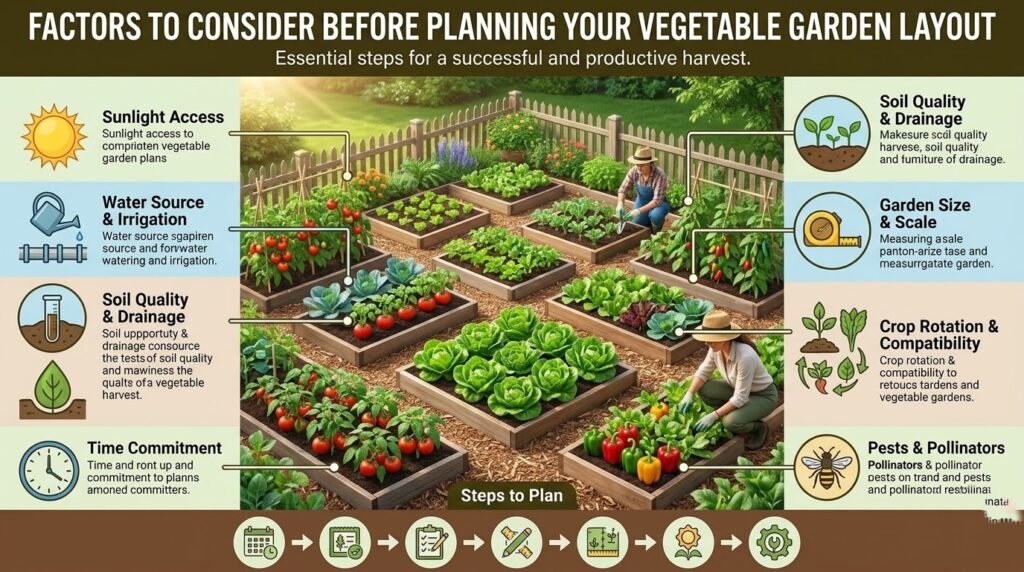
Sunlight: Sunlight is the single most important factor in vegetable garden planning. Most vegetables need a minimum of 6–8 hours of direct sunlight daily to grow properly and produce a good harvest. But sunlight alone is not enough — several other conditions need to be right before your layout comes together successfully.
- Soil quality — healthy, well-draining soil gives roots room to grow and access nutrients
- Water access — place beds within easy reach of a water source to make irrigation practical
- Garden size — your available space directly shapes which layout works best
- Crop selection — always choose crops suited to your local climate and season length
Assess all these factors together before finalizing any layout plan.
Vegetable Garden Spacing Guide (Quick Chart)
Spacing your plants correctly from the start saves you from thinning, transplanting, and poor harvests later. Use this quick reference guide before you plant to make sure every vegetable gets the room it needs to thrive.
Leafy Greens
- Lettuce: 20–25 cm apart
- Spinach: 15 cm apart
Root Vegetables
- Carrots: 5–10 cm apart
- Radish: 10–15 cm apart
Fruiting Vegetables
- Tomatoes: 45–90 cm apart
- Peppers: 45–60 cm apart
Large Plants
- Squash: 90–120 cm apart
- Pumpkin: 90–120 cm apart
Always check seed packet instructions for variety-specific spacing needs.
Layout Planning Step-by-Step
Planning your garden on paper before touching the soil makes the whole process smoother and more productive. Follow these steps in order:
- Measure your garden area — know your exact dimensions before anything else
- Choose your layout type — row, raised bed, square foot, or vertical based on your space
- Group plants by height — place tall plants at the back so they do not shade shorter ones
- Follow spacing guidelines — use the spacing chart to give every plant enough room
- Leave walking paths — keep at least 60 cm between beds for easy access
- Draw a garden plan — sketch everything out before a single seed goes in the ground
Best Vegetable Garden Layout Ideas (With Examples)
Different spaces call for different approaches. Here are four practical layout ideas suited to real-life garden situations:
- Small backyard garden plan — use raised beds arranged in a U-shape to maximize growing area while keeping a central walking path
- Balcony/container garden — group containers by sunlight needs and use vertical structures to add growing levels without taking up floor space
- 4×8 raised bed layout — divide the bed into sections using the square foot method, dedicating each zone to a specific crop group
- Family-sized garden plan — combine row planting for bulk crops like beans and carrots with raised beds for herbs and salad greens
A well-matched layout makes both planting and harvesting significantly easier throughout the season.
Common Mistakes to Avoid
Even experienced gardeners fall into these traps. Knowing what to avoid upfront saves you time, money, and a frustrating growing season.
- Overcrowding plants — cramming too many plants together leads to poor airflow, disease, and smaller yields
- Ignoring plant height — tall plants placed in front block sunlight from shorter crops behind them
- Not leaving walking space — without clear paths, maintaining and harvesting your garden becomes unnecessarily difficult
- Planting without planning — guessing spacing and layout on the spot almost always leads to wasted space and poor results
- Mixing incompatible plants — some plants actively compete with or negatively affect their neighbors, stunting growth on both sides
Pro Tips to Maximize Space and Yield
Once your basic layout is sorted, these practical strategies help you get more out of every square foot of growing space.
- Use vertical gardening — train climbing crops like beans, cucumbers, and peas upward on trellises to free up ground space for other plants
- Try companion planting — grow mutually beneficial plants together, such as basil near tomatoes, to improve growth and naturally reduce pests
- Practice succession planting — sow new seeds every two to three weeks so you get a continuous harvest rather than everything ripening at once
- Use compact varieties — many vegetables now have dwarf or bush versions specifically bred for smaller spaces without sacrificing yield
Conclusion
A productive vegetable garden does not happen by accident — it starts with a solid plan. Getting your layout right and following proper spacing guidelines are two of the most impactful decisions you will make as a gardener. They determine how much sunlight your crops receive, how healthy your plants stay, and ultimately how much food ends up on your table. Whether you have a large backyard or a small balcony, the right layout exists for your space. Do not skip the planning stage — it takes an hour on paper but saves an entire season of frustration. Grab a measuring tape, sketch out your space, and start designing your garden today. Your best harvest is one good plan away.
Frequently Asked Questions
How far apart should vegetables be planted?
Spacing depends on the type of vegetable. Small crops like radishes need 10–15 cm, medium crops like peppers need 45–60 cm, and large sprawling plants like squash need 90–120 cm. Always check the seed packet for variety-specific recommendations before planting.
Can I plant vegetables closer together?
You can, but it comes with trade-offs. Planting too close together reduces airflow, increases the risk of disease, and causes plants to compete for water and nutrients. The result is usually smaller yields and weaker plants. If space is genuinely limited, choose compact or dwarf varieties that are bred for closer spacing.
What is square foot gardening?
Square foot gardening is a planting method that divides your growing area into a grid of one-foot squares. Each square is dedicated to a specific plant based on its spacing needs. It is one of the most beginner-friendly approaches available because it removes guesswork, minimizes wasted space, and keeps your garden easy to manage from day one.
What is the best layout for a vegetable garden?
There is no single best layout — it depends on your available space and goals. Raised beds work best for small spaces with poor soil, row planting suits large open gardens, and square foot gardening is ideal for beginners who want an organized, space-efficient system. Assess your space first, then choose accordingly.