I used to walk right past the purple section at my local farmers market. Honestly, I didn’t know what half of those vegetables even were. Then one Saturday, I grabbed a bunch of purple carrots on a whim — and that changed everything.
Purple vegetables are having a real moment across the US right now, and for good reason. They look incredible on the plate, they pack serious nutritional benefits, and they taste just as good as the vegetables you already love — sometimes better.
In this post, I’m breaking down the best purple vegetables you can find, how to cook them, and some simple recipe ideas to get you started. No complicated techniques. Just good food with great color.
Health Benefits of Purple Vegetables
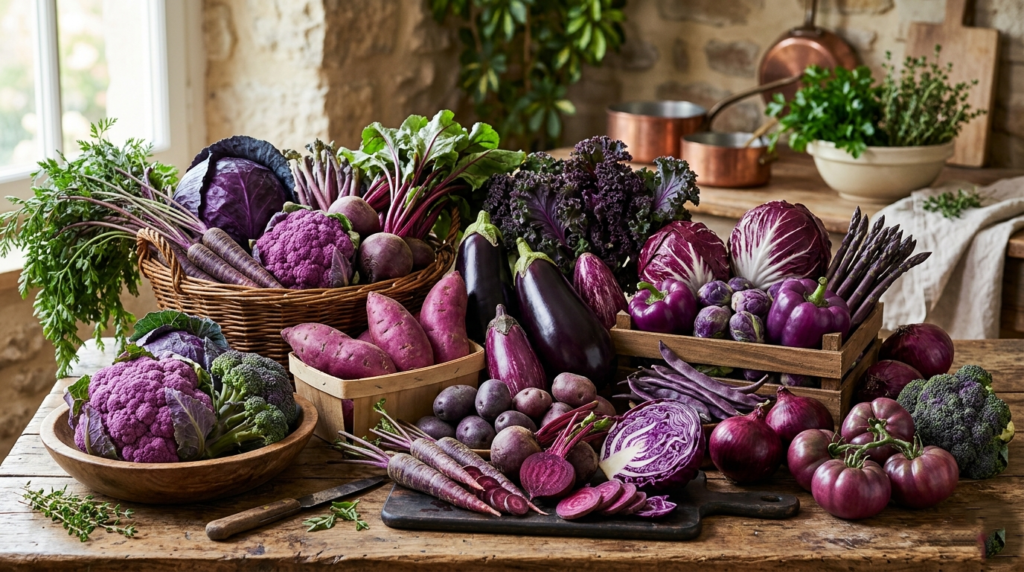
Most Americans don’t get enough variety in their diets — and purple vegetables can genuinely help with that. Their deep color comes from anthocyanins, natural plant pigments loaded with health benefits:
- Rich in Antioxidants — fight free radicals and reduce oxidative stress in the body
- Support Heart Health — may lower inflammation and improve blood circulation
- Boost Brain Function — linked to better memory and long-term cognitive health
- Strengthen Immunity — packed with vitamins, minerals, and phytonutrients your body needs
- Promote Healthy Digestion — an excellent source of dietary fiber that keeps your gut happy
26 Purple Vegetables List
You might be surprised how many purple vegetables are actually available across the US — at farmers markets, specialty grocery stores, and even regular supermarkets. Here’s a complete list with flavors and best uses
1. Purple Cabbage
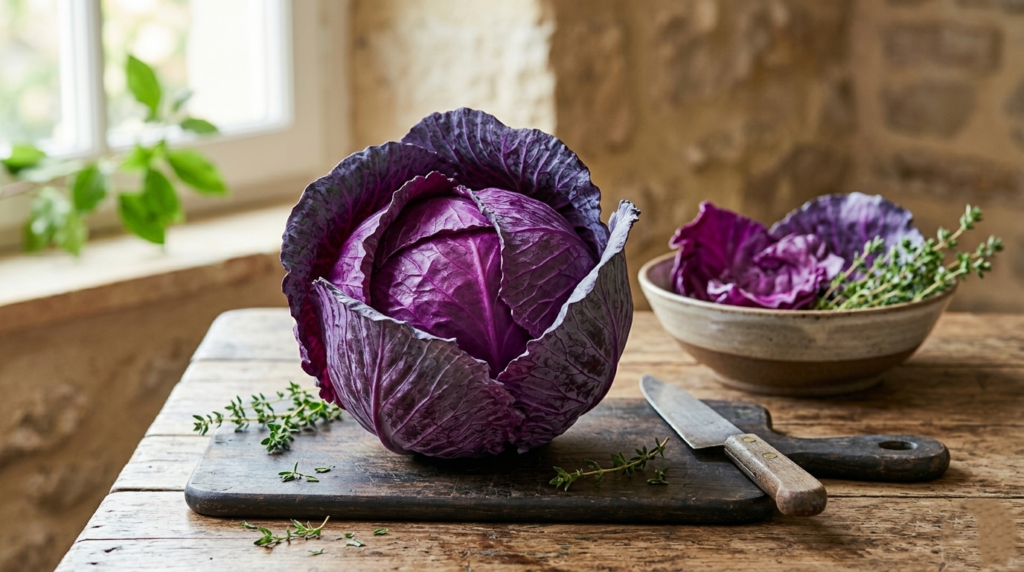
Purple cabbage is one of the most common purple vegetables you’ll find in US grocery stores. It has a crisp texture and a slightly peppery flavor. The deep color holds up well in cold dishes. Use it in coleslaw, salads, stir-fries, or slow-cooked braises for a colorful, nutritious meal.
2. Purple Carrots
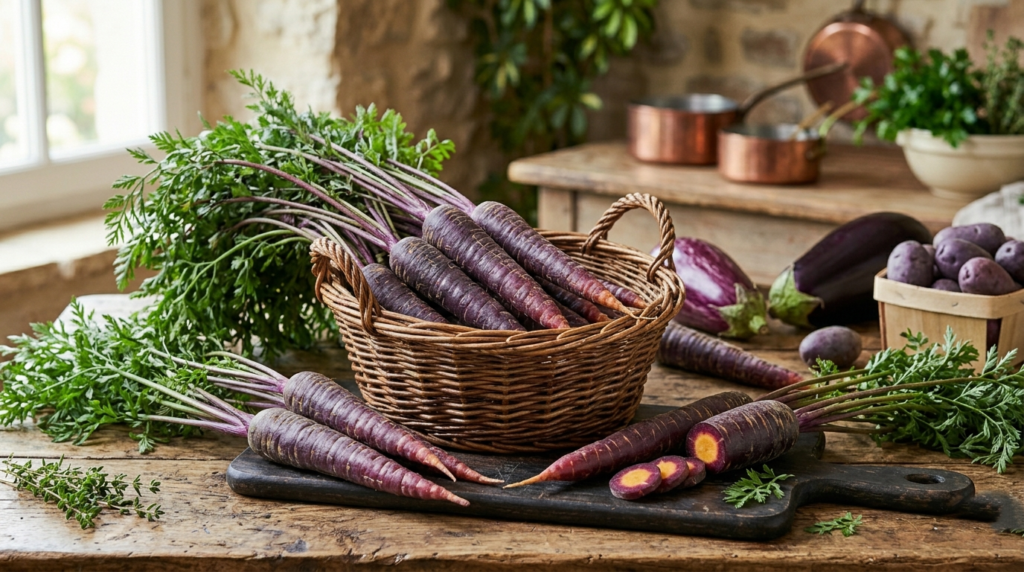
Purple carrots look dramatic on any plate, but they taste just like the orange ones you already love — sweet and earthy. Some varieties are purple all the way through; others show orange inside. Roast them, juice them, or eat them raw as a snack.
3. Purple Cauliflower
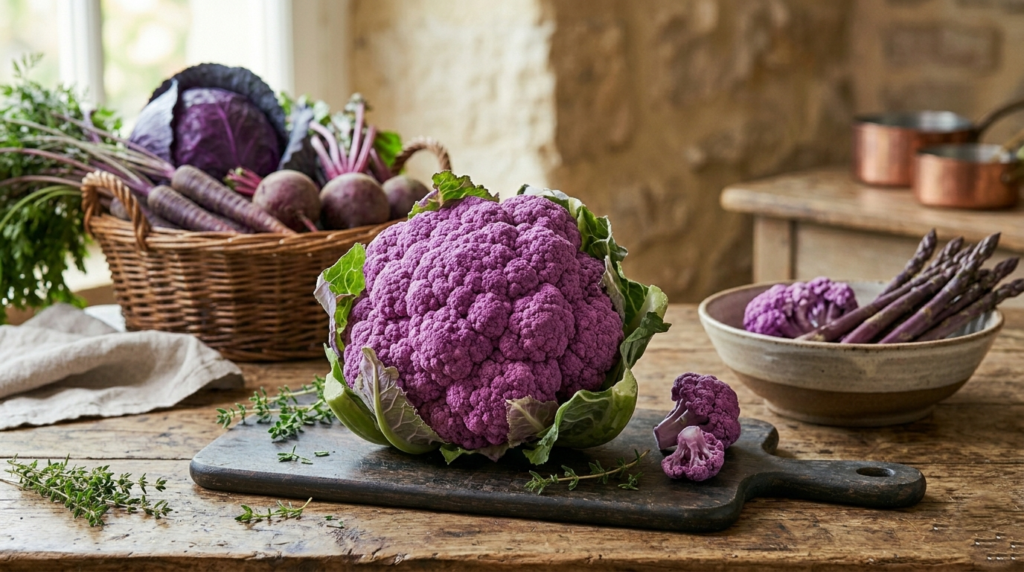
Don’t let the color fool you — purple cauliflower tastes just like the white variety you’re used to. It’s mild, slightly nutty, and very versatile. Roast it with olive oil, steam it as a side dish, or rice it for a low-carb meal with serious visual appeal.
4. Purple Potatoes
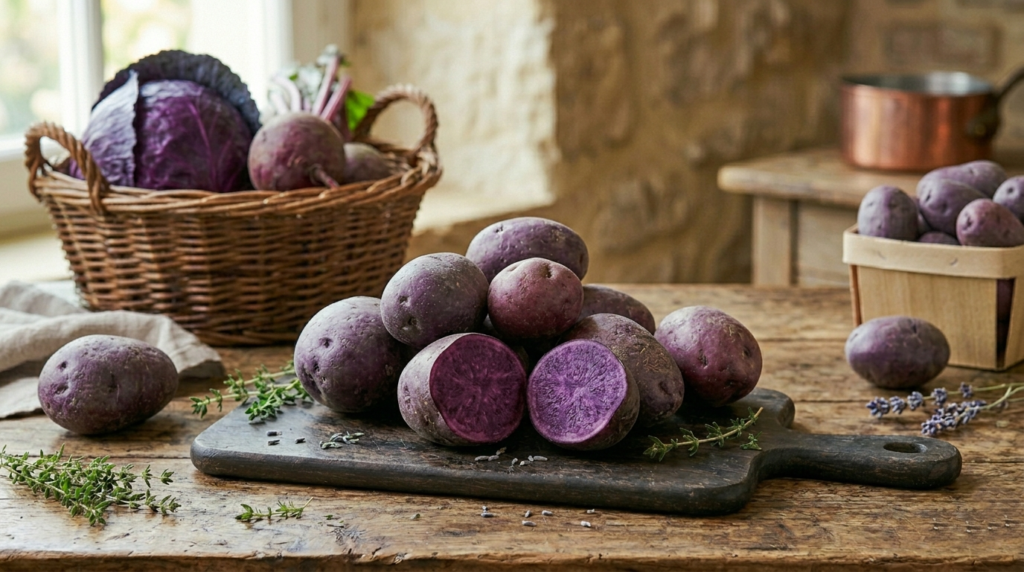
Purple potatoes are showing up in more US supermarkets and farmers markets every year. They have creamy flesh that’s naturally deep purple. The flavor is very similar to a russet potato. Mash them, make fries, or toss them into a potato salad for a colorful twist.
5. Purple Sweet Potatoes
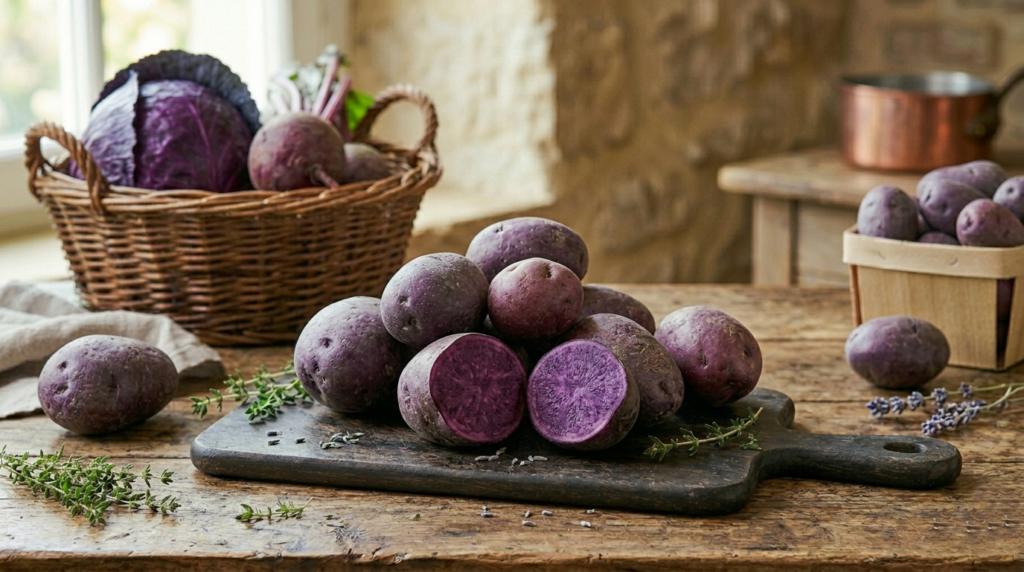
These are denser and sweeter than regular sweet potatoes. Varieties like Okinawan and Stokes Purple are popular across the US. They hold their color beautifully when baked. Use them for pies, smoothies, or simply roasted as a side dish packed with natural sweetness and nutrition.
6. Purple Eggplant
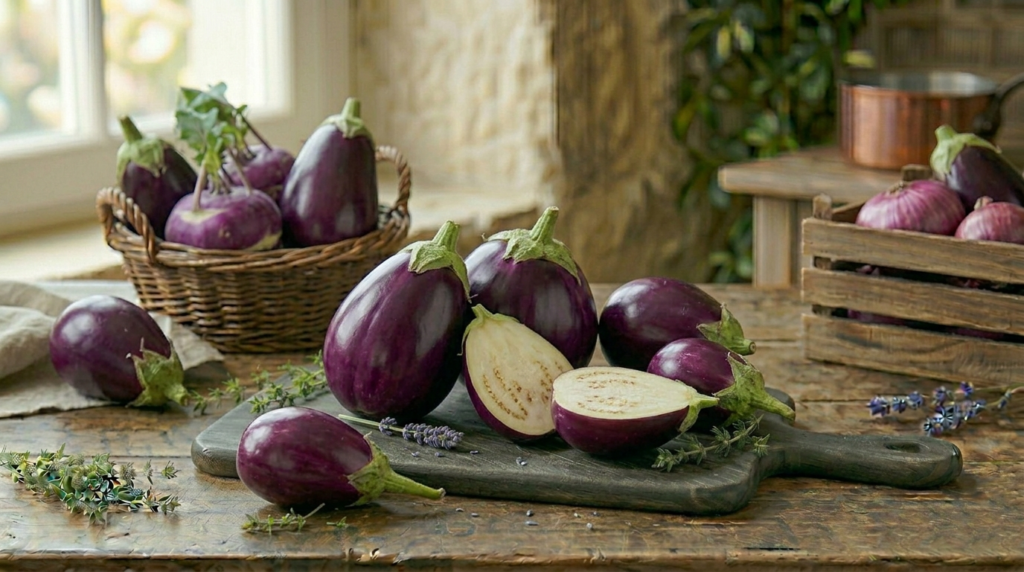
Purple eggplant is actually the most common type of eggplant sold in the US. It has glossy skin and tender, spongy flesh that soaks up flavors well. Grill it, roast it, or cook it into curries and stews. It’s a staple in many global cuisines widely enjoyed across America.
7. Purple Asparagus
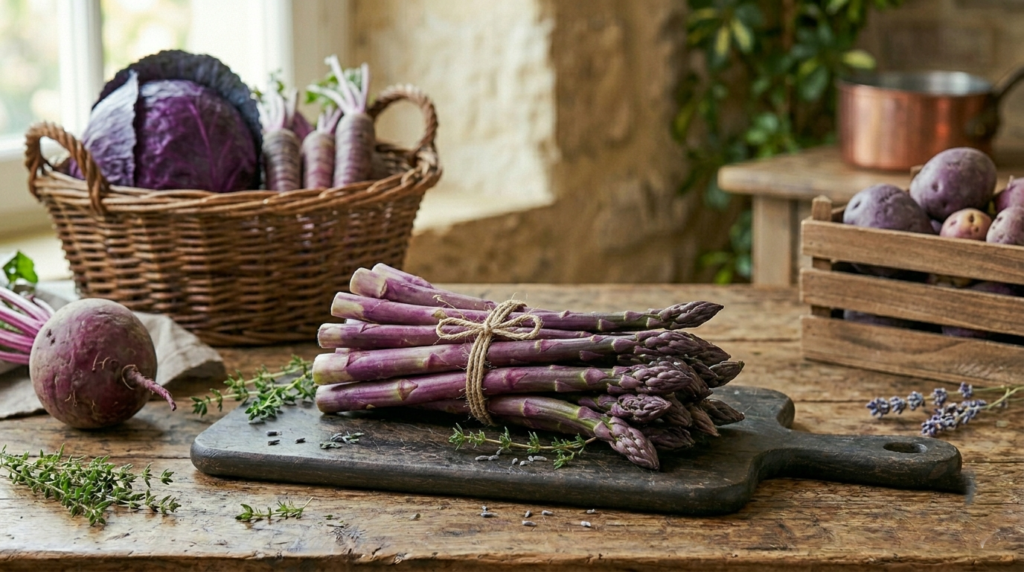
Purple asparagus is sweeter and slightly more tender than the green variety. It shows up at farmers markets in early spring across the US. Grill it quickly or roast it with a little olive oil and salt. The tips are especially good eaten raw in salads.
8. Purple Kohlrabi
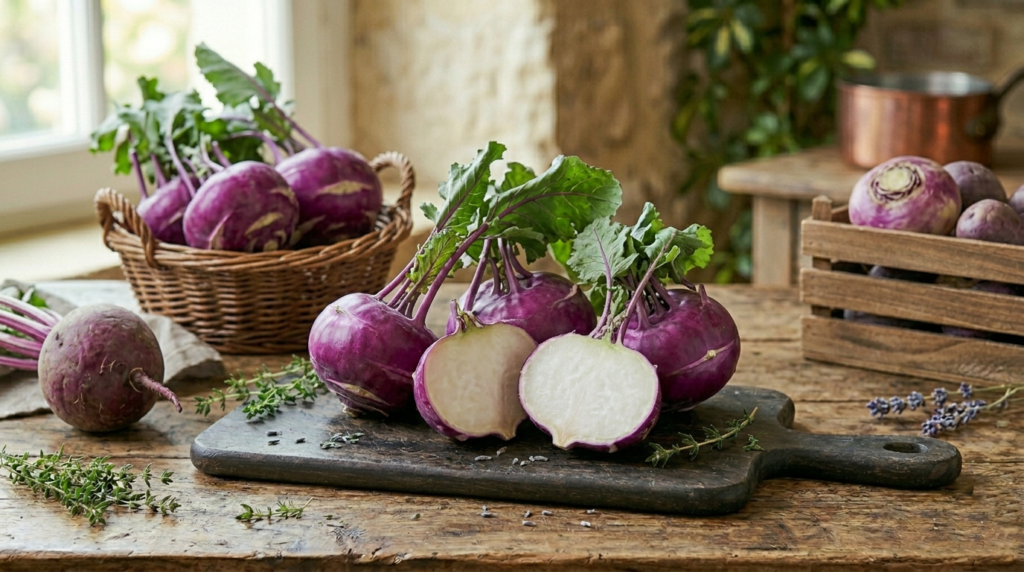
Kohlrabi is still unfamiliar to many American home cooks, but it’s worth trying. The purple variety has a crunchy, mild, slightly sweet flesh beneath its colorful outer skin. Eat it raw in slaws, cut it into sticks for snacking, or toss it into a quick stir-fry.
9. Purple Brussels Sprouts
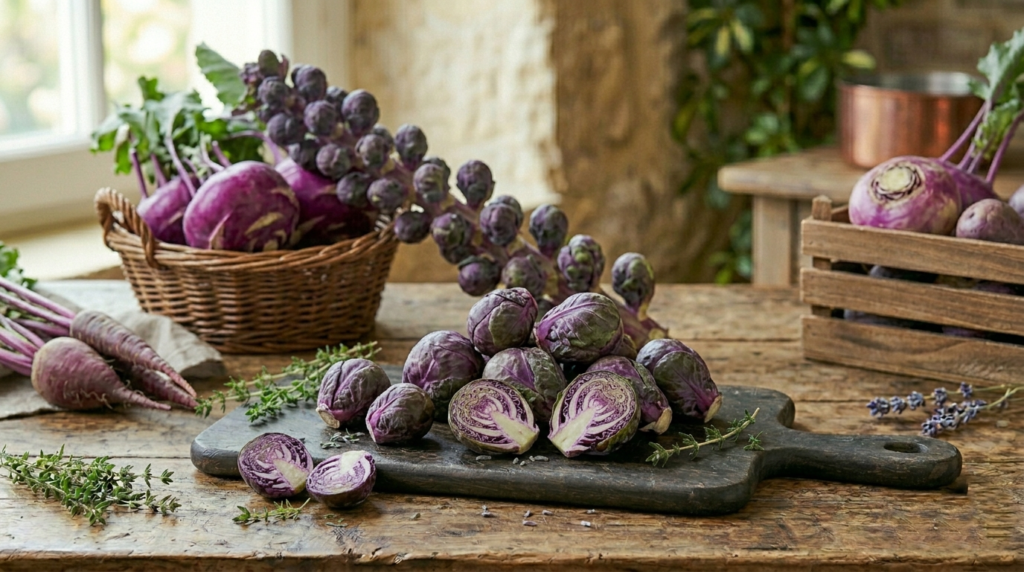
Purple Brussels sprouts look like tiny purple cabbages and taste just as good as the green ones. They have a nutty, slightly sweet flavor that gets even better when roasted. The color softens a bit with heat, but the taste is worth it. Try them sautéed with garlic and butter.
10. Purple Artichokes
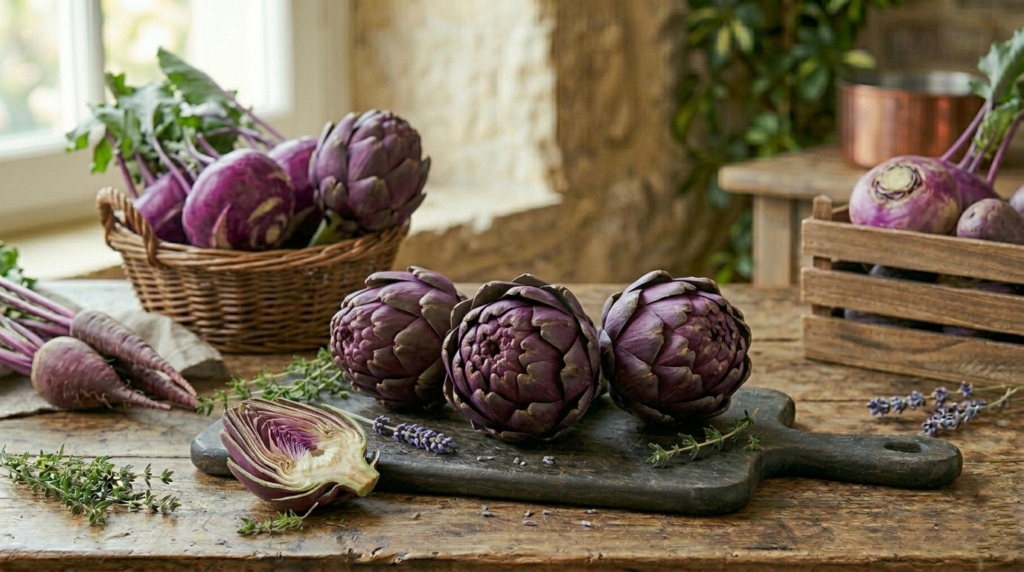
Purple artichokes are a beautiful alternative to the standard green globe artichoke. They tend to be slightly more tender and a little sweeter. Steam or grill them and serve with a dipping sauce. They’re not always easy to find, but specialty stores and farmers markets often carry them.
11. Purple Beans
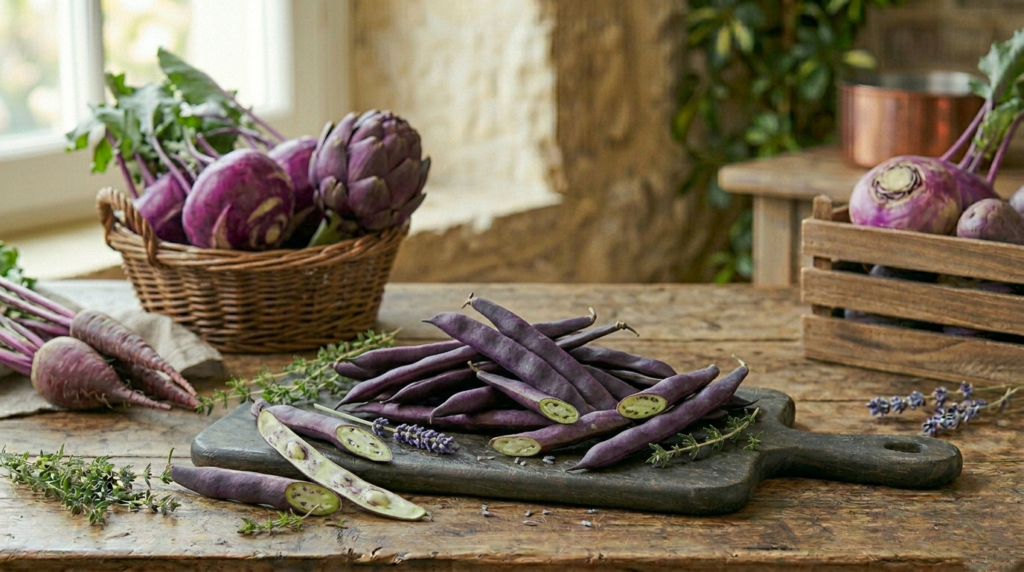
Purple beans are a smart choice for home gardeners because the pods are easy to spot among the leaves at harvest time. They taste just like fresh green beans — crisp and flavorful. One thing to know: the purple color disappears completely once you cook them, so enjoy the color while it lasts.
12. Purple Peppers
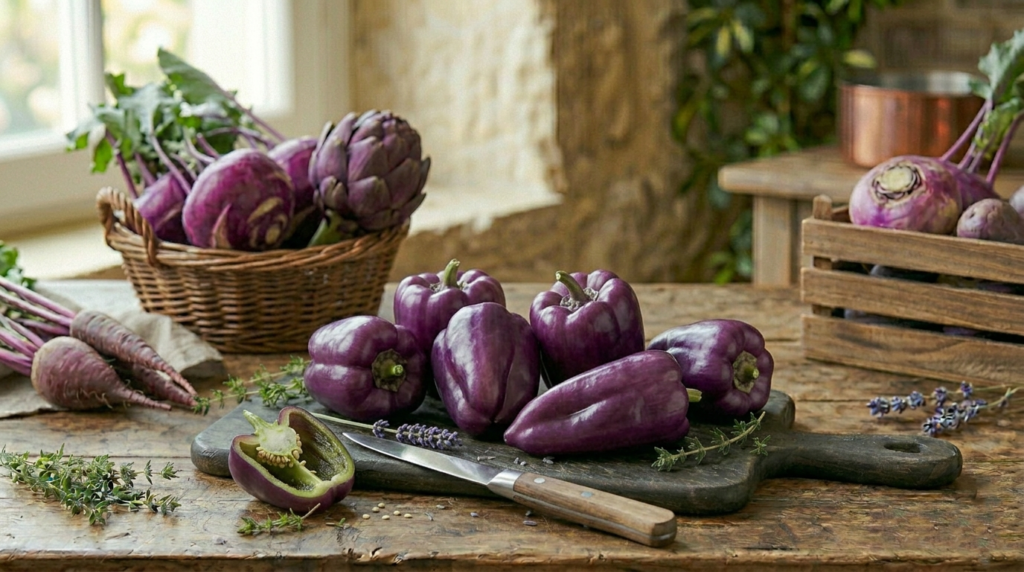
Purple bell peppers are mild and slightly sweet, just like their green and red cousins. They add serious color to veggie trays and salads. You can also find purple hot pepper varieties if you want some heat. Stuff them, roast them, or slice them raw for a colorful snack platter.
13. Purple Tomatoes
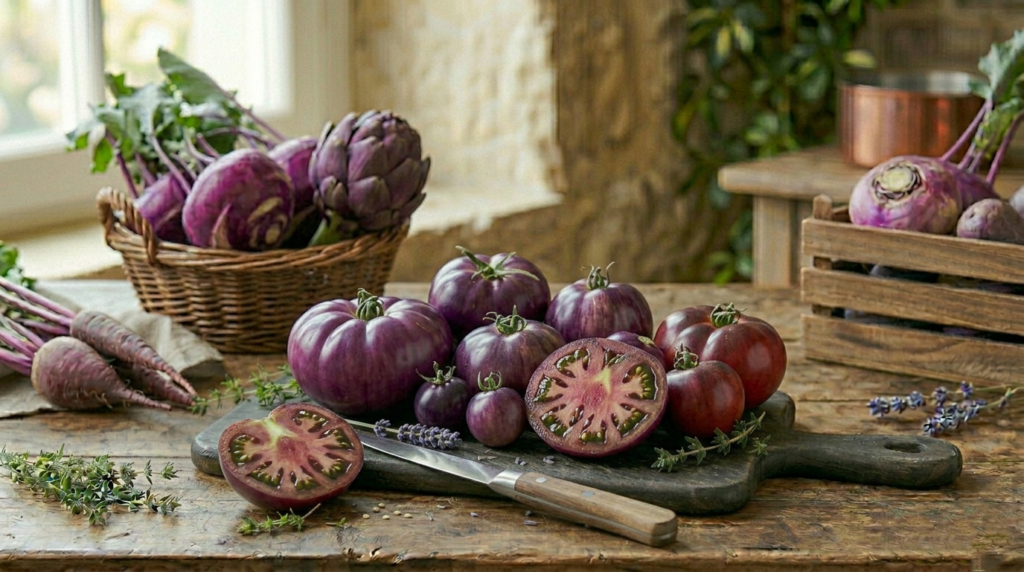
Purple tomatoes like Cherokee Purple and Pruden’s Purple are favorites among heirloom tomato lovers in the US. They have a rich, complex, slightly smoky flavor that standard red tomatoes can’t quite match. Slice them thick for sandwiches, toss them in salads, or simmer them down into a deeply flavored homemade sauce.
14. Purple Tomatillos
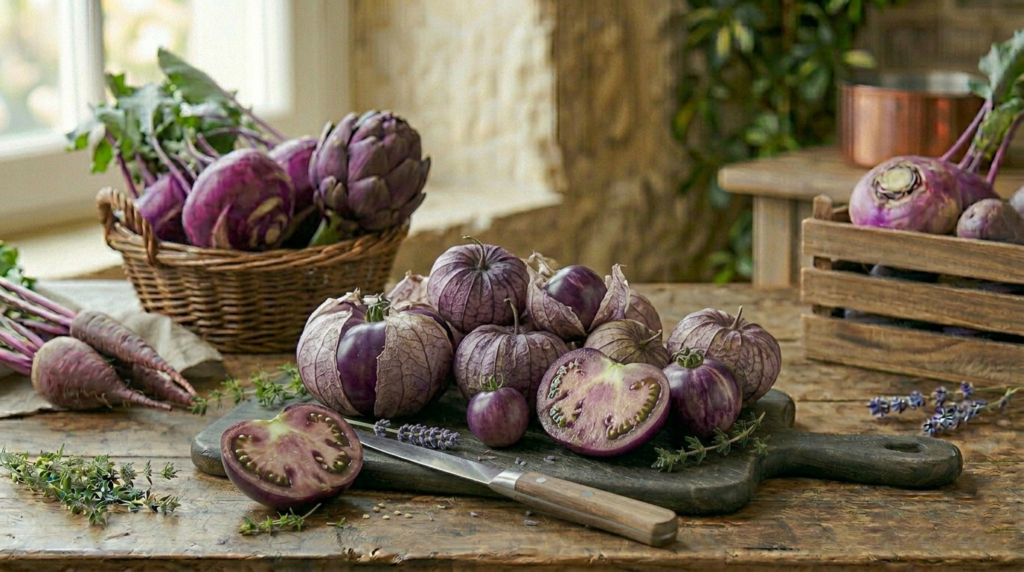
Purple tomatillos are a fun twist on the more familiar green variety used in Mexican-American cooking. They’re slightly sweeter and less tart than green tomatillos. Use them to make a richer, sweeter salsa or blend them into sauces for tacos and enchiladas. They grow well in US home gardens too.
15. Purple Radishes
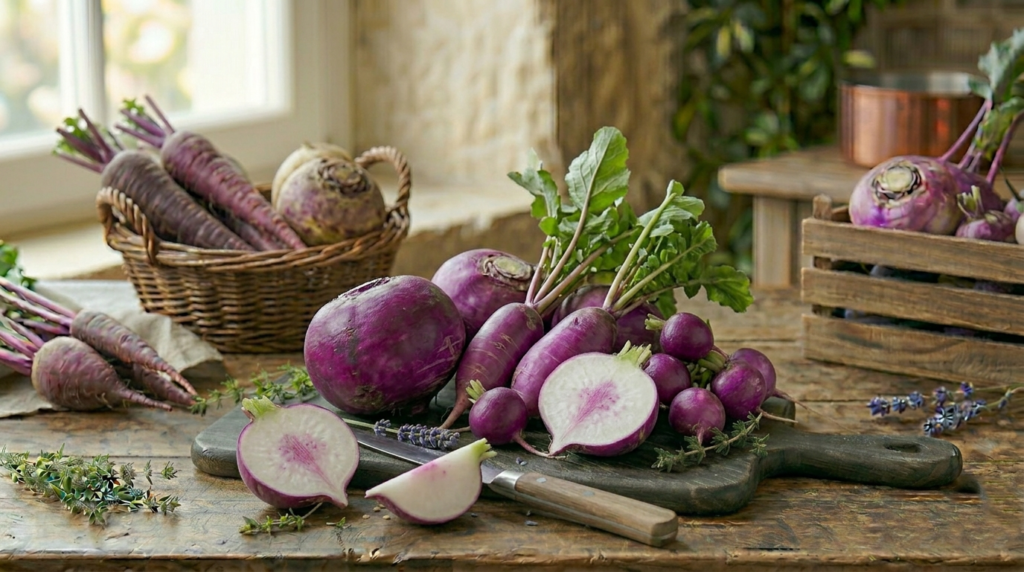
Purple radishes bring the same peppery crunch you expect from a standard radish, but with a much more striking appearance. Some varieties have purple skin with white flesh; others are colored all the way through. They’re great sliced thin in salads or quick-pickled in vinegar for a tangy, colorful condiment.
16. Purple Turnips
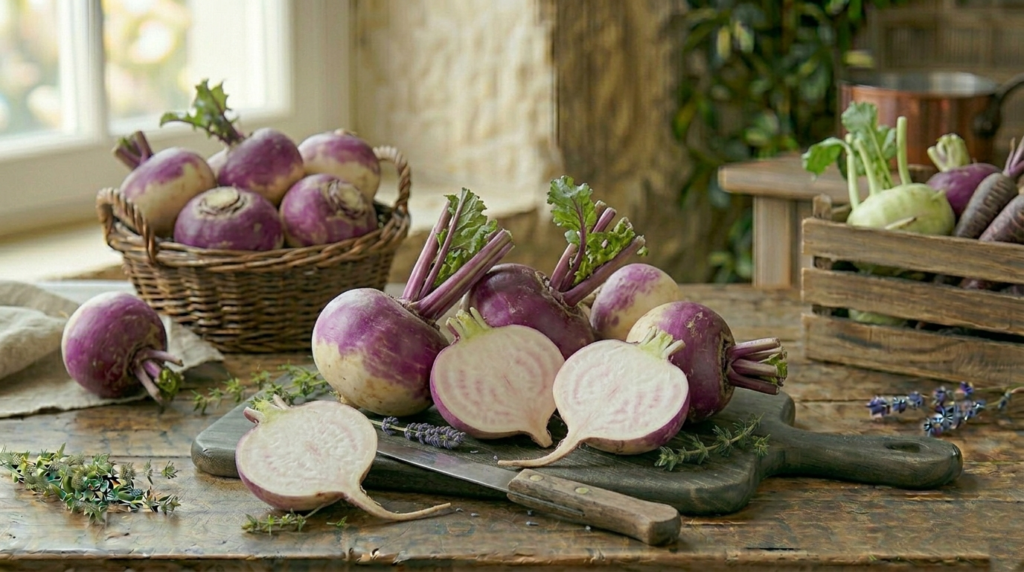
Purple turnips are old-fashioned garden vegetables that deserve more attention. They’re milder than radishes, with a crisp white interior beneath their purple-tinged skin. Roast them with other root vegetables for a hearty side dish, or add chunks to soups and stews where they absorb surrounding flavors really well.
17. Purple Onions
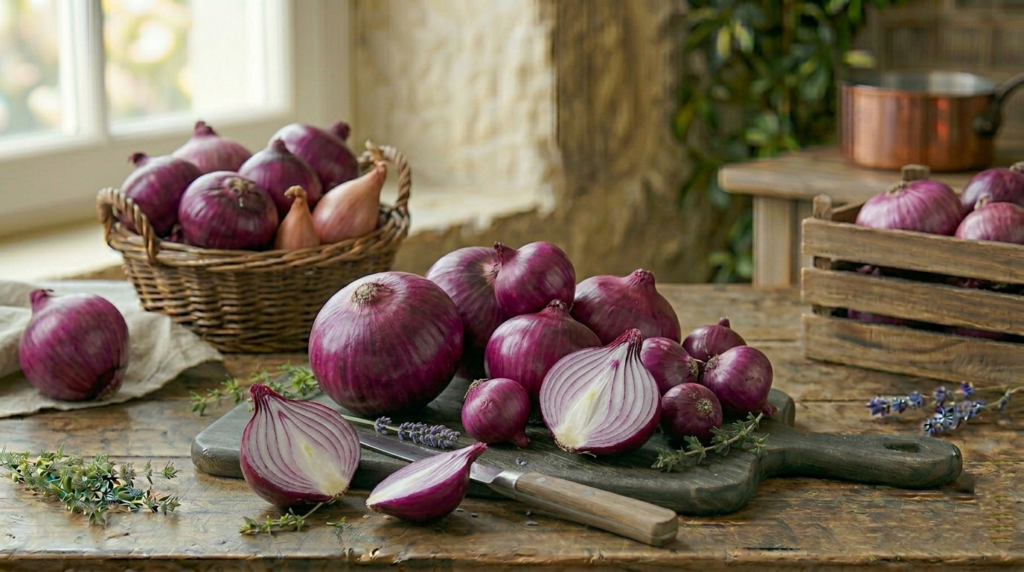
Most Americans already use purple onions regularly without thinking much about it. They’re sweeter and milder than yellow onions, which makes them perfect for eating raw in salads and salsas. Quick-pickle them in vinegar and sugar for a topping that works on tacos, burgers, grain bowls, and more.
18. Purple Bok Choy
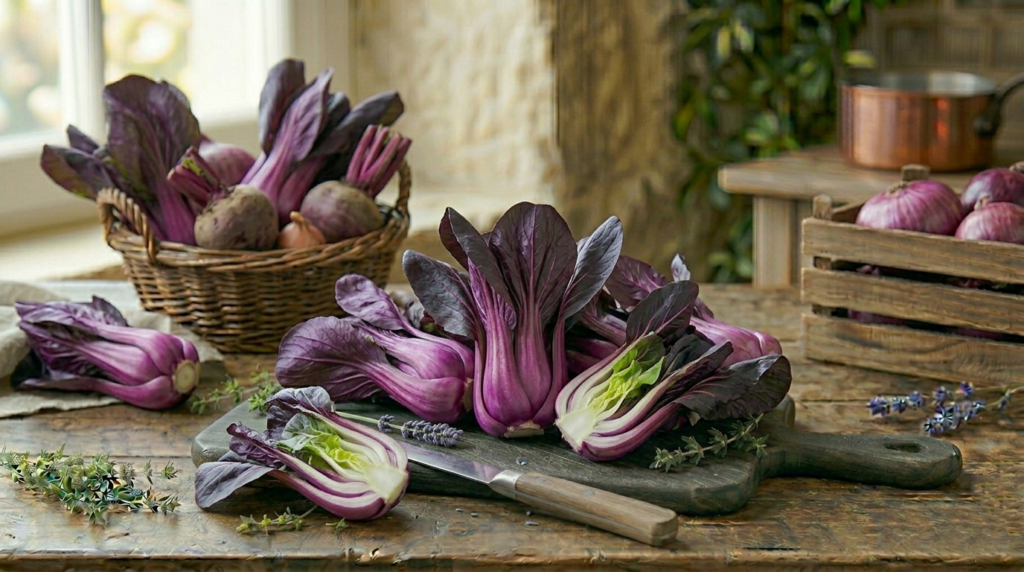
Purple bok choy is a colorful version of the popular Asian green found in many US grocery stores. Both the crunchy stems and leafy tops are edible and nutritious. It wilts quickly when cooked, so keep the heat high and the cooking time short. It’s best in stir-fries and light soups.
19. Purple Kale
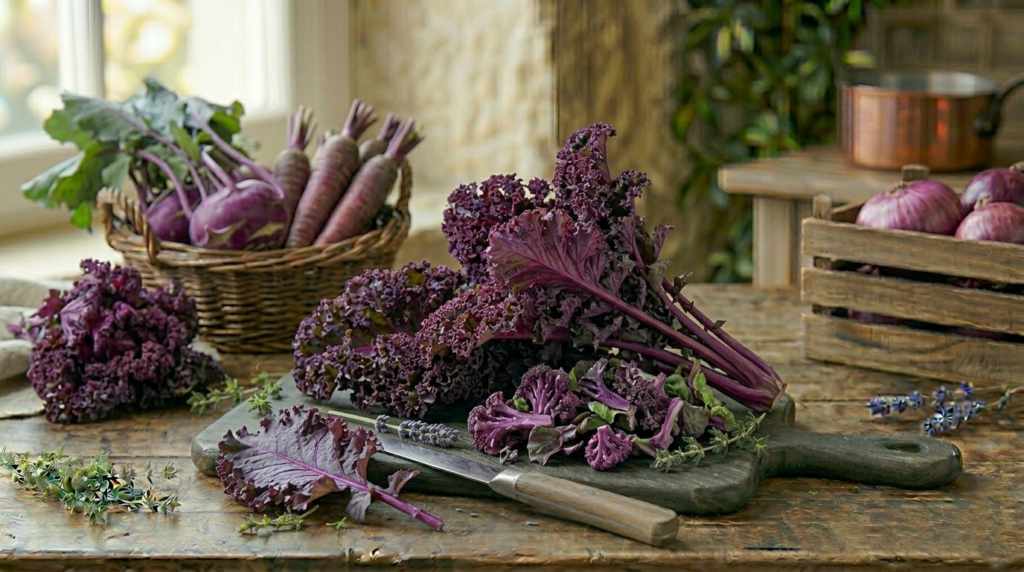
Purple kale is just as nutritious as the green variety — maybe even more so, thanks to its anthocyanin content. The leaves are curly, hearty, and robust in flavor. Massage it raw for salads, blend it into smoothies, or bake the leaves into crispy chips. It also grows well in US home gardens.
20. Purple Lettuce
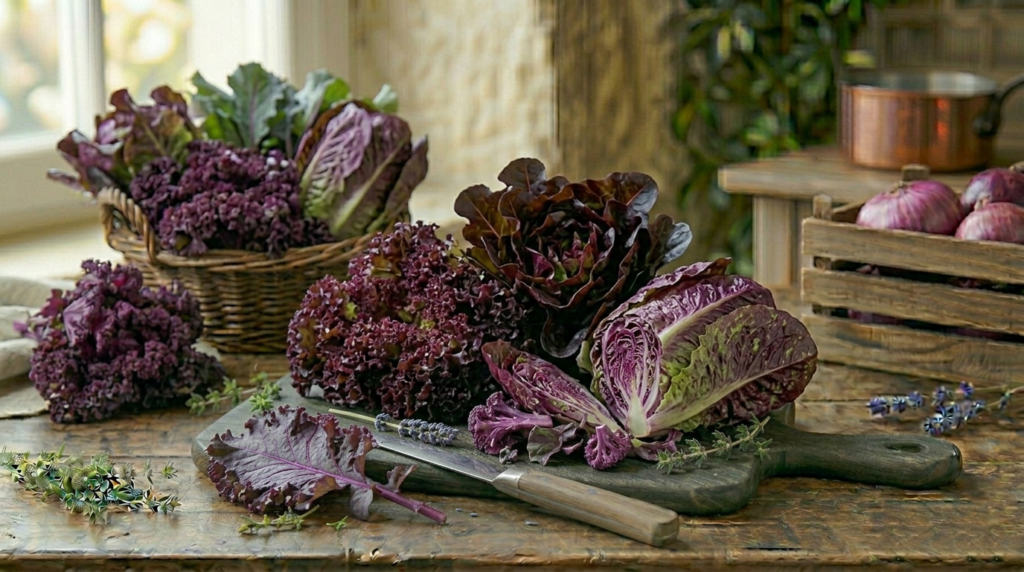
Purple lettuce varieties add real color to everyday salads without changing the flavor much. The leaves are tender and mild, just like green lettuce. Some varieties are fully purple; others have green leaves with purple-tinged edges. Either way, they make a simple salad look far more interesting and appetizing on the table.
21. Radicchio
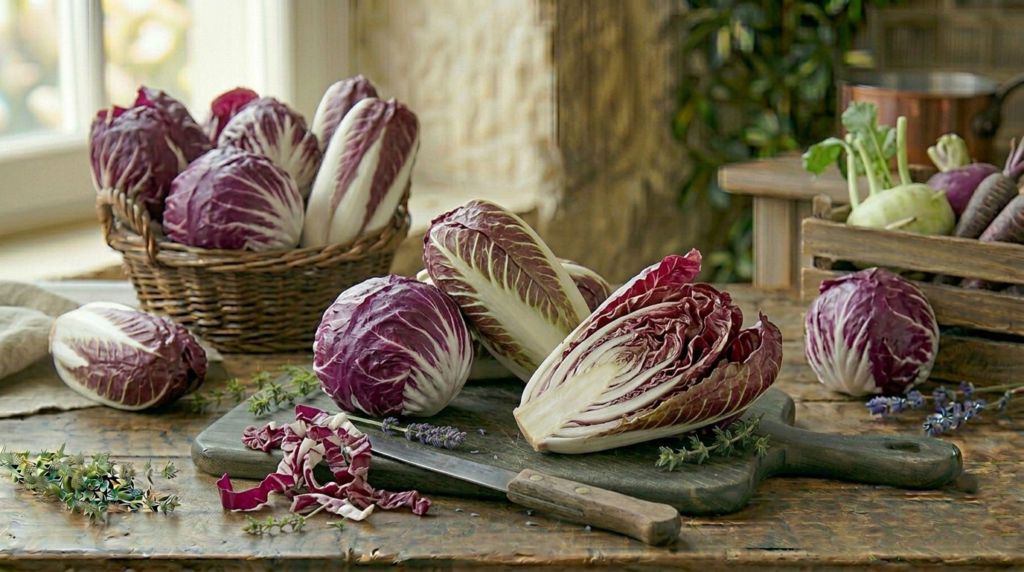
Radicchio looks like a small purple cabbage but tastes completely different. It’s quite bitter, which makes it a great contrast to sweet or creamy ingredients in a salad. It’s popular in Italian-American cooking across the US. Grilling radicchio mellows the bitterness and brings out a subtle sweetness worth trying.
22. Purple Corn
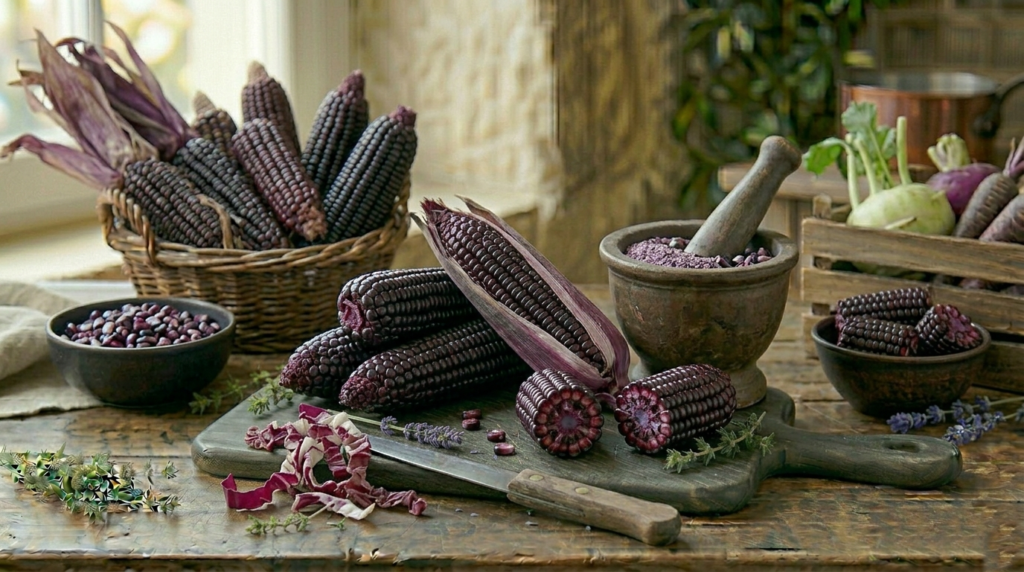
Purple corn isn’t something you’ll find at every US grocery store, but it’s worth seeking out. It’s most often dried and ground into cornmeal rather than eaten fresh off the cob. It’s also highly decorative. Some specialty food brands are using purple corn in chips and drinks for its rich color and antioxidants.
23. Taro
Taro is a starchy root vegetable common in Hawaiian and Pacific Islander communities across the US. The flesh is often purple-speckled and has a mild, slightly sweet flavor. It’s the base ingredient for poi, a traditional Hawaiian dish. Cook it thoroughly before eating — raw taro can irritate the mouth and throat.
24. Amaranth Leaves
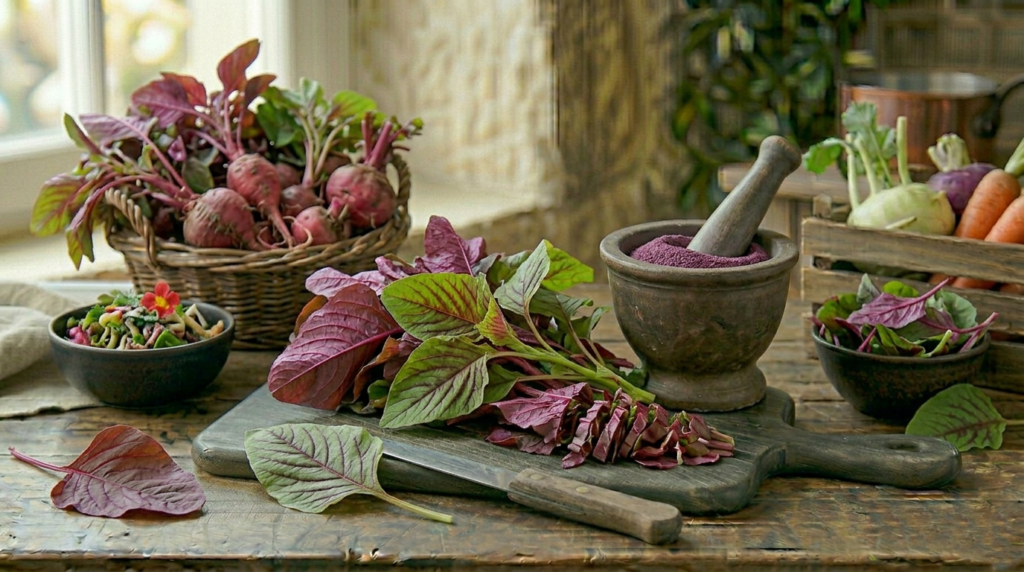
Amaranth leaves are nutritious and underused in most American kitchens. The purple-toned leaves are edible and cook down similarly to spinach. They have a mild, slightly earthy flavor. Sauté them with garlic and olive oil for a quick side dish, or add them to soups for an extra boost of plant-based nutrition.
25. Purple Basil
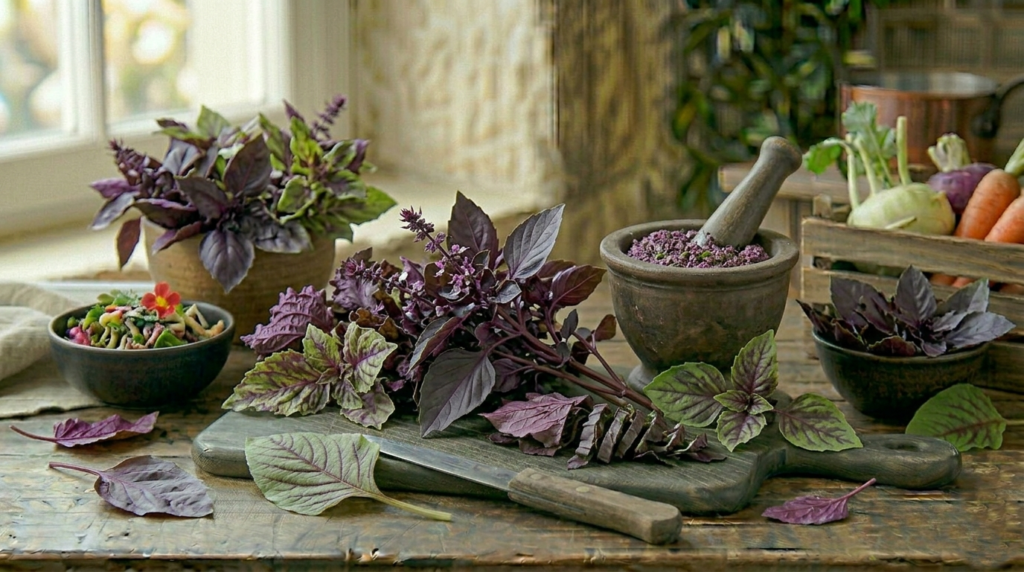
Purple basil is everything you love about regular basil — fragrant, flavorful, and fresh — but with a deep purple color that looks beautiful in the garden and on the plate. Use it exactly like green basil: blend into pesto, tear it over pasta, or use it as a garnish for salads and appetizers.
26. Purple Peas
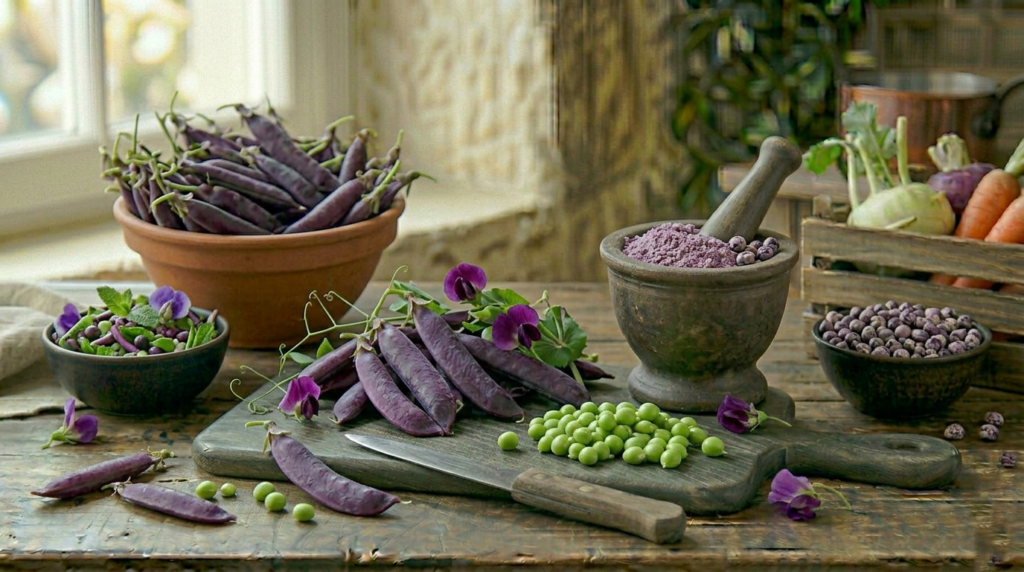
Purple peas have gorgeous deep-colored pods that make them fun to grow and harvest. The color is on the outside only — the peas inside are the same green you’d expect. Eat the whole pod raw as a snack, or give them a quick steam to preserve their natural sweetness and slight crunch.
Conclusion
Adding more color to your plate doesn’t have to be complicated. Purple vegetables are beautiful, yes — but more importantly, they’re genuinely good for you. From purple cabbage at your local grocery store to heirloom tomatoes at the farmers market, there’s something on this purple vegetables list for every budget and cooking style.
Try one new variety this week. Roast some purple potatoes. Toss purple kale into your next smoothie. Small changes add up over time.
Eating a wide range of colorful foods is honestly one of the simplest things you can do for your long-term health. Start with purple.
Frequently Asked Questions
Q1. What are some common purple vegetables names?
Some of the most common purple vegetables names include purple cabbage, purple carrots, purple kale, purple potatoes, purple sweet potatoes, radicchio, purple eggplant, purple cauliflower, and purple asparagus. Many of these are readily available at US grocery stores, farmers markets, and specialty produce sections year-round.
Q2. What are the main purple vegetables benefits?
Purple vegetables benefits come largely from anthocyanins — natural plant pigments that act as powerful antioxidants. Regular consumption may support heart health, improve brain function, reduce inflammation, strengthen immunity, and promote healthy digestion. Adding them to your daily meals is a simple, natural way to boost your overall nutrition.
Q3. What are some popular purple vegetables and fruits?
Popular purple vegetables and fruits include purple cabbage, purple grapes, eggplant, blackberries, purple sweet potatoes, blueberries, radicchio, figs, and purple carrots. Both the vegetables and fruits get their color from the same anthocyanin pigments, which means they share many of the same powerful health benefits worth adding to your diet.
Q4. Where can I find a purple vegetables list with pictures?
A purple vegetables list with pictures is available on gardening websites, seed company catalogs, and food blogs across the US. Your local farmers market is also a great real-life reference — vendors often display a wide variety of colorful produce that you can see, touch, and ask about directly before buying.
Q5. Is purple vegetable potato real?
Yes, purple vegetable potato is absolutely real. Varieties like Adirondack Blue and Purple Majesty have naturally deep purple flesh and skin. They taste very similar to regular russet potatoes but contain higher levels of antioxidants. You can find them at Whole Foods, specialty grocery stores, and farmers markets across the United States.
Q6. What are the best purple vegetables to eat?
The best purple vegetables to eat depend on your taste preferences. Purple cabbage, purple sweet potatoes, and purple kale are great for everyday cooking. Purple carrots and radishes work well as raw snacks. Eggplant and purple potatoes are perfect for hearty cooked meals. All of them are nutritious and worth adding to your regular grocery list.
Q7. Which purple vegetables work best in salad?
The best purple vegetables in salad include purple lettuce, radicchio, purple cabbage, purple carrots, purple radishes, and purple onions. They add color, crunch, and nutrition to any salad bowl. Thin-sliced purple cabbage and quick-pickled purple onions are especially popular salad toppings at restaurants and home kitchens all across the US.